Energy Data and Flexibility Management for Positive Energy Districts.
Positive Energy Districts are a key driver of the transition to climate-neutral cities. Effective energy data management enables real-time monitoring of energy flows, smarter optimization of local resources, and the implementation of flexible energy strategies. Successful industrial examples – such as the Bosch plant in Schwieberdingen, Germany, show how centralized energy management and demand-side flexibility can maximize the use of local heat and electricity while reducing dependence on external energy.
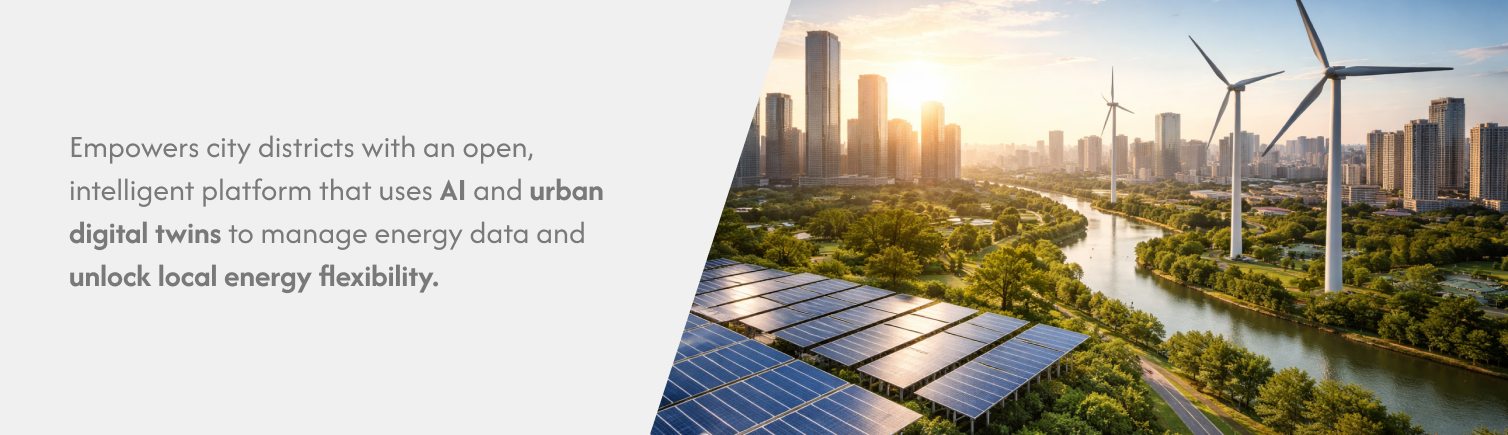
The FlexPED project builds on these proven approaches and scales them up to the city level through an AI-based Urban Digital Twin, enabling secure, data-driven energy optimization for urban districts.